Alchemical & Hermetic Symbols
The coded visual language of transformation, secrecy and the search for the philosopher's stone — and why the symbols still matter without the gold.
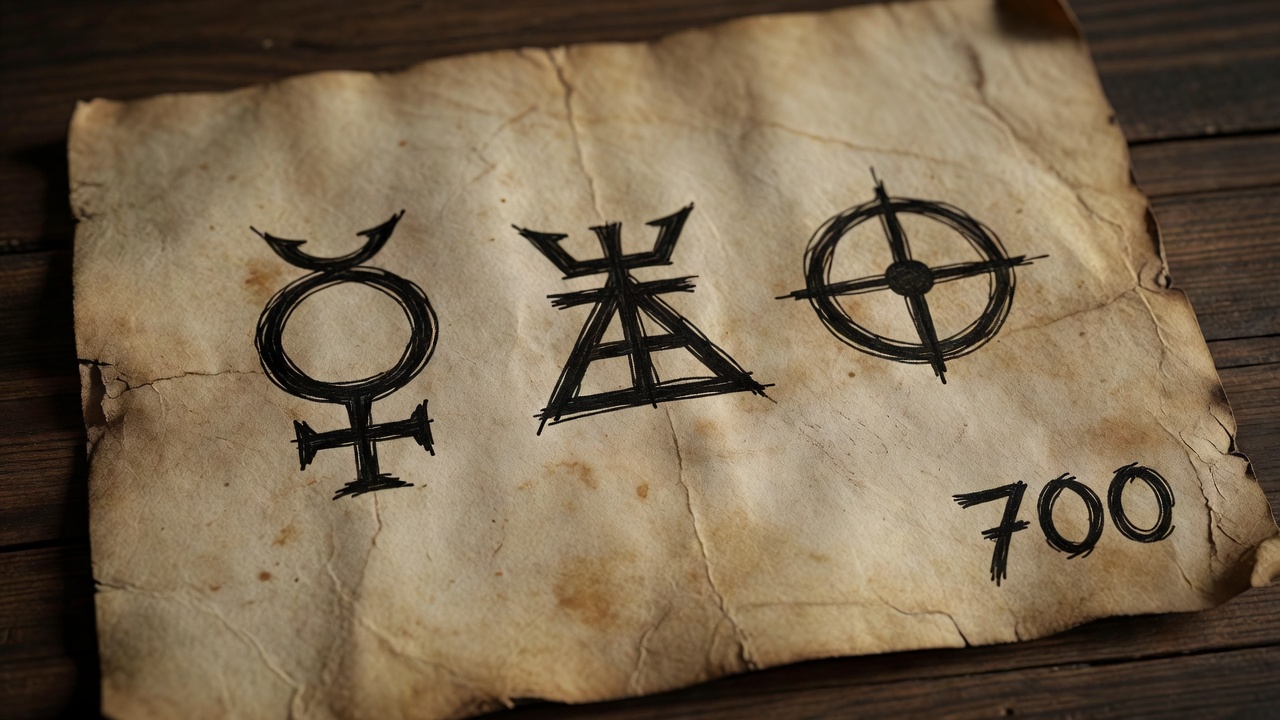
What alchemy actually was
Alchemy was simultaneously proto-chemistry and a spiritual discipline, practised across Hellenistic Egypt, the Islamic world and medieval Europe. It drew heavily on Hermeticism — a philosophical tradition attributed to the legendary figure Hermes Trismegistus and codified in texts like the Corpus Hermeticum and the Emerald Tablet, home to the maxim "as above, so below." Alchemists used a private symbolic language partly to protect genuinely valuable technical knowledge, and partly because their goals — purification, transmutation, immortality — were framed as much in spiritual as material terms.
Key symbols and their meanings
| Symbol | Represents | Role in the Great Work | Later adoption |
|---|---|---|---|
| Mercury (☿) | Quicksilver, the volatile principle | Solve — dissolution | Modern astronomical/chemical symbol |
| Sulfur (🜍) | The combustible, soul-like principle | Coagula — binding | Retained in chemistry texts before modern notation |
| Salt (🜔) | The body, the fixed principle | Base matter awaiting purification | Survives in ritual and culinary symbolism |
| Ouroboros | The cyclical process, the prima materia | Represents the whole Great Work | Reused in Jungian psychology as a symbol of individuation |
| Caduceus vs. Rod of Asclepius | Hermes' herald staff vs. the healing god's staff | Frequently confused with each other | The caduceus is mistakenly used as a medical emblem in parts of the US |
The three stages of the Great Work
Classical alchemical texts describe a sequence of transformations, most commonly: Nigredo (blackening, decomposition of raw matter), Albedo (whitening, purification) and Rubedo (reddening, the final perfected state, associated with the philosopher's stone). Some traditions insert an additional Citrinitas (yellowing) stage between Albedo and Rubedo.
Literal gold vs. inner gold
Reading alchemy literally
- Alchemists directly advanced early chemistry — distillation, acids and metal alloys among their genuine contributions.
- Scholars such as Jabir ibn Hayyan in the Islamic Golden Age systematised laboratory technique still recognisable today.
- Risk: not every text was a literal lab manual — many used deliberately cryptic code names ("Decknamen") that resist literal decoding.
Reading alchemy symbolically
- Carl Jung's mid-20th-century reinterpretation of alchemical imagery as a map of psychological individuation gave the tradition renewed relevance.
- Useful for understanding why the imagery persisted long after transmutation was known to fail.
- Risk: over-applying modern psychology to historical texts whose authors had literal metallurgical goals can erase alchemy's real scientific contribution.
A common mix-up worth clearing up
The caduceus — Hermes' winged staff entwined with two snakes, a symbol of commerce and messengers — is routinely confused with the Rod of Asclepius, a single snake coiled around a plain staff belonging to the Greek god of medicine. The caduceus's mistaken adoption by some US medical organisations in the early 20th century is a documented case of a symbol acquiring a meaning through error rather than history.
Further reading
- Ancient Mythological Symbols — the Ouroboros's earlier mythological life.
- Sacred Geometry — geometry's role in Hermetic thought.
- Wikipedia: Alchemical symbol
- The Metropolitan Museum of Art: Alchemy
Studying alchemical manuscripts and need a symbol identified? Ask our editors.