Cultural Talismans & Amulets
Small objects, carried for centuries, meant to shift fate — protection, luck and belonging — and how to collect reproductions without funding the looted-artifact trade.
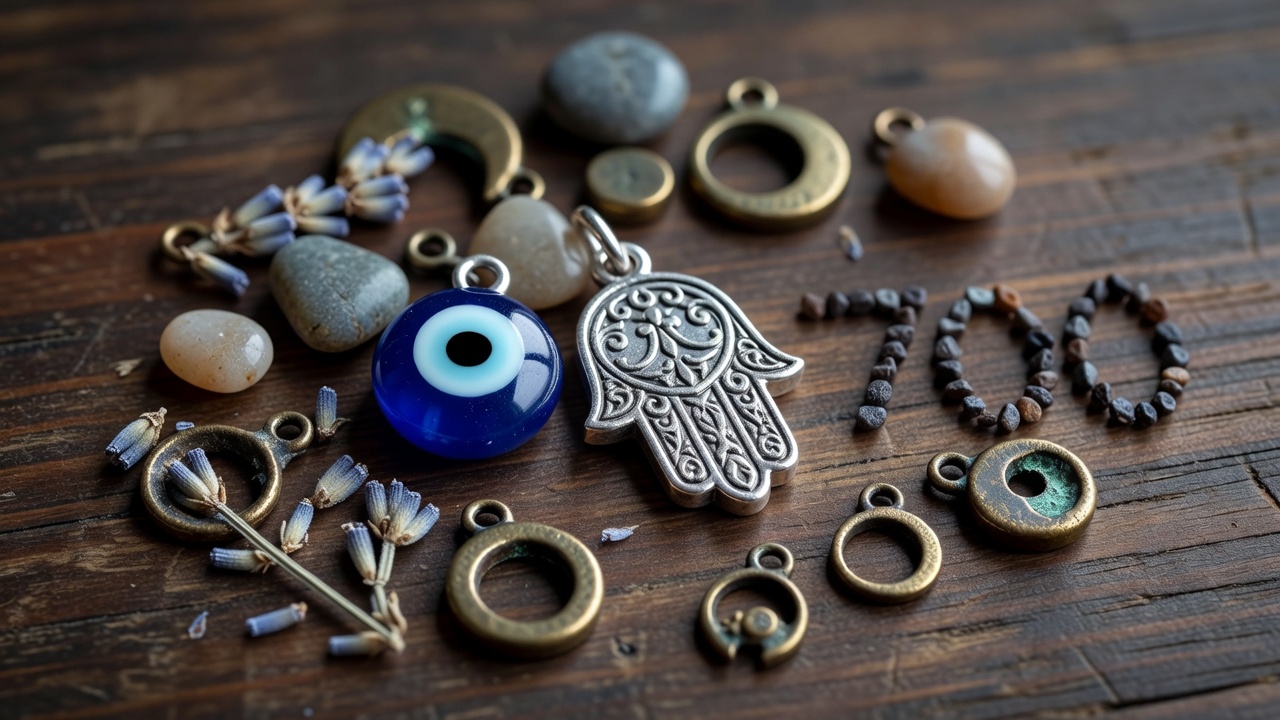
Talisman vs. amulet
The two terms are often used interchangeably, but scholars of material religion draw a distinction: a talisman is believed to actively attract a desired outcome, such as luck or love, while an amulet is believed to passively ward off harm, such as illness or the "evil eye." In practice, most historical objects do both at once.
Five talismans compared
| Object | Origin culture | Traditional material | Believed function | Reproduction price range (2026 collector market) |
|---|---|---|---|---|
| Nazar Boncuğu (Evil Eye) | Anatolia / Mediterranean | Blown glass, cobalt blue | Deflects the "evil eye" of envy | $3–$25 |
| Hamsa | North Africa & Middle East (Jewish and Islamic traditions) | Silver, brass | Protection, blessing, fertility | $15–$120 |
| Scarab | Ancient Egypt | Faience, carved stone | Rebirth, protection in the afterlife | $10–$300 (reproduction); genuine museum-grade pieces are far higher and often restricted from sale |
| Omamori | Japan (Shinto/Buddhist temples) | Cloth pouch with a paper charm inside | Specific protection — health, travel, exams | $5–$20 (temple donation-based) |
| Rabbit's Foot | European folk magic, popularised in the US | Preserved animal foot | General good luck | $5–$15 |
Authenticity and ethics
A genuine ancient amulet — an excavated Egyptian scarab, for instance — sits in a very different ethical category from a modern reproduction. The market for authentic antiquities is heavily shaped by the 1970 UNESCO Convention on the Means of Prohibiting the Illicit Import, Export and Transfer of Ownership of Cultural Property, which many countries use as the legal baseline for repatriation claims. Museums including the British Museum have faced sustained calls to return excavated and colonial-era artifacts to their countries of origin. As a general rule, we recommend buying reproductions from transparent, reputable retailers rather than "antiqued" pieces sold without provenance.
Buying reproductions responsibly
Advantages of reproductions
- Affordable and widely available, including from official museum shops.
- No legal or ethical grey area around ownership or export.
- Lets collectors engage with a tradition without displacing cultural property.
What to watch for
- Mass-produced pieces can misrepresent original materials, scale or craftsmanship.
- Some sellers deceptively market "antiqued" finishes as genuinely old.
- Always ask for a clear reproduction disclosure in writing before buying anything described as ancient.
A quick authenticity checklist
- Ask for provenance documentation and export licensing on anything sold as genuinely ancient.
- Be sceptical of "ancient" items priced implausibly low.
- Reputable auction houses with antiquities departments publish full provenance histories — treat sellers who won't as a red flag.
Further reading
- Religious Iconography — how devotional objects relate to formal religious symbols.
- Alchemical & Hermetic Symbols — objects believed to hold transformative power.
- Wikipedia: Amulet
- UNESCO: Fighting the illicit trafficking of cultural property
Sourcing a piece and unsure of its provenance? Ask our editors before you buy.